
Hippopotamus tusk worry beads: archive
There are no finished pieces in stock right now. Use an archived work as a reference to discuss a similar material, form and budget.

Cushions worry beads — hippo tusk, no. 211
Cushions in hippo tusk, handmade, one of a kind

Narkomanki worry beads — hippo tusk, no. 21
Narkomanki in hippo tusk, handmade by Zhenya Kartavyh

Narkomanki worry beads — hippo tusk, no. 16
Narkomanki in hippo tusk, handmade, one of a kind

Cushions worry beads — hippo tusk, no. 10
Cushions in hippo tusk, handmade, one of a kind
No pieces match these filters. Change the selection or reset the filters.
Hippopotamus tusk is one of the most underrated materials in the world of worry beads, and among the hardest of all tooth materials. The hippo carries large canines in its lower jaw with exceptionally dense, fine-grained dentine and a thin layer of enamel; it is this hardness that yields a particularly smooth, almost glassy polish and a remarkably clean white tone, prized for yellowing far more slowly than elephant ivory . On the law, precisely: the hippopotamus is listed in CITES Appendix II, meaning international trade in its tusks is possible but only with permits and certificates; a responsible seller works solely with legally documented material, and a buyer should ask for the paperwork. In cross-section hippo tusk shows a fine concentric pattern and a dense texture free of visible pores. In the hand the material is noticeably dense, cool, heavier than its size suggests, with a smoothness that invites the fingers. Spun, it sounds bright and clear — higher and crisper than mammoth, with a faint crystalline edge from the high density. Patina builds slowly and delicately, a warm cream tone. Care is simple: stable humidity, no direct heat, a dry soft wipe. These beads suit those seeking purity of white, exceptional hardness, and a ringing voice — lovers of rare materials with an honest, lawfully documented pedigree.
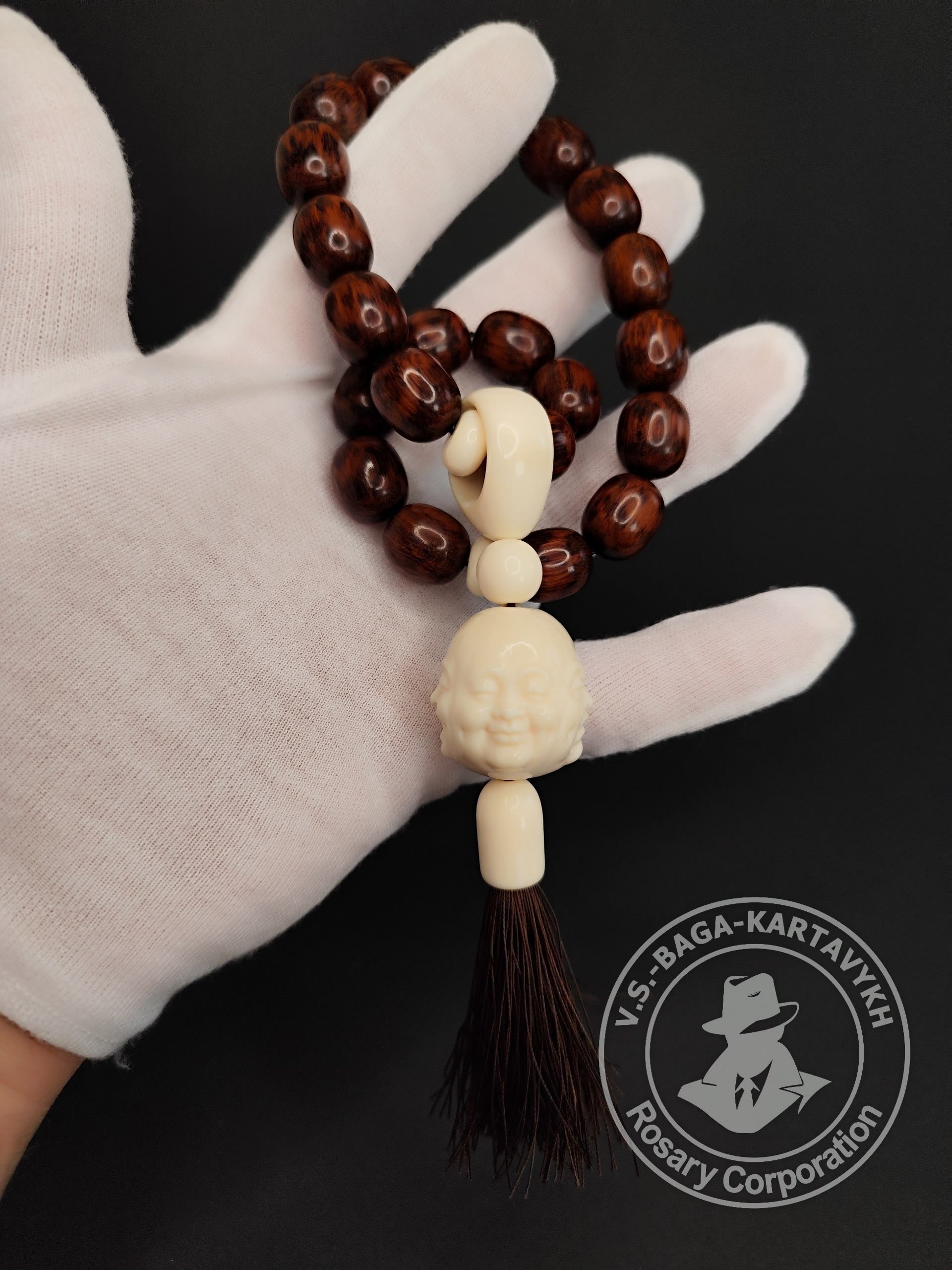
How to choose Hippopotamus tusk worry beads
This page is more than a list. It helps explain how the material behaves in worry beads and what can be requested if a piece is sold.
Look beyond color: density, weight, sound, polish and how the material ages in the hand matter.
If a piece is sold, use it as a reference: we can suggest a similar direction by material, form and budget.
For a gift, clarify weight and purpose: flipping, counting, collecting or keeping as a personal object.