
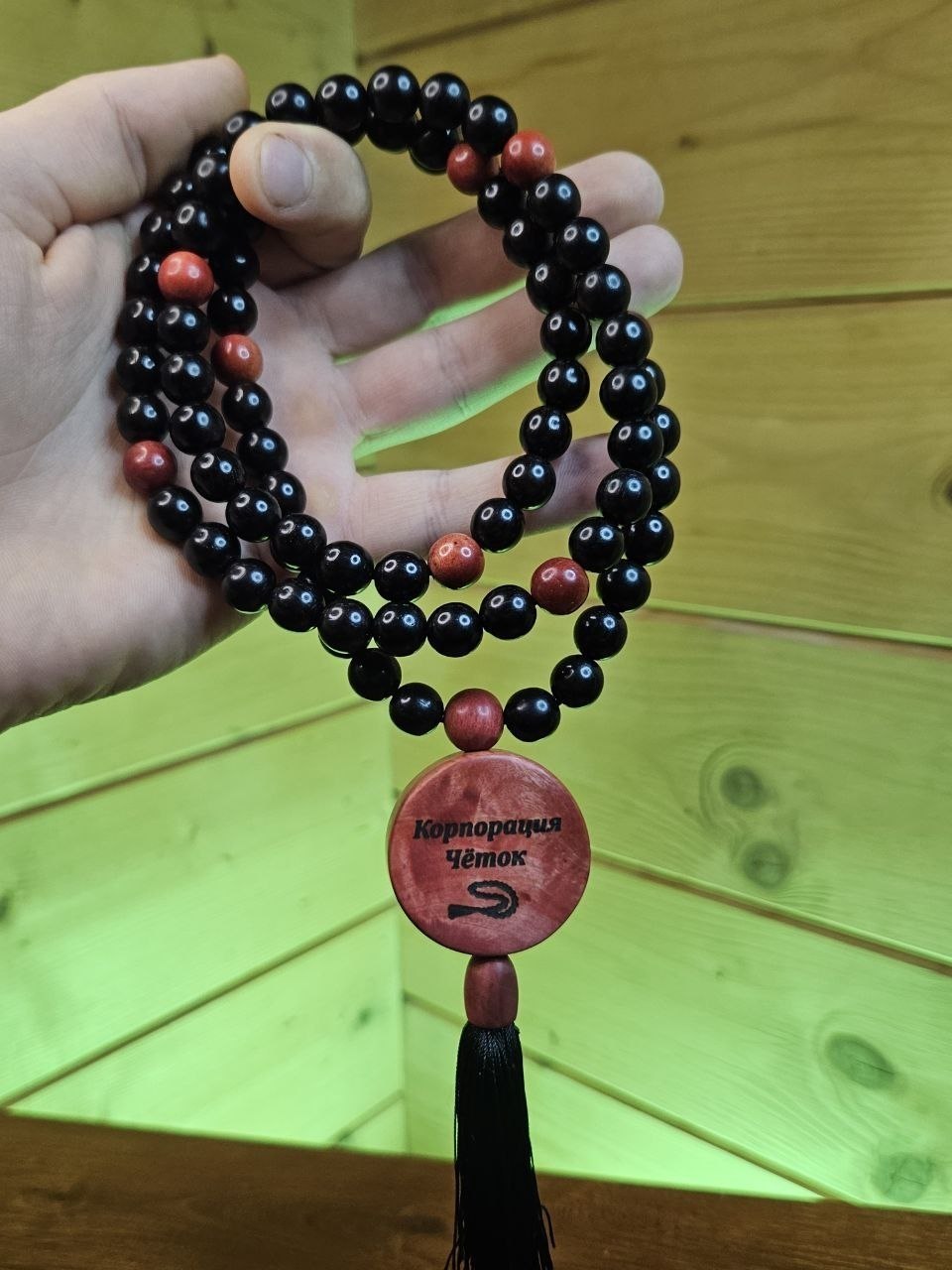
Model: Peribory
Detailed model description
In short, this model is built from beads. You choose both the number and the shape: barrels, olives, round beads, buttons and many others. Peribory may have a sliding runner or no runner, a pendant or no pendant, and a tassel or no tassel.
The world and history of Peribory are exceptionally rich in variety. If you want a solid foundation, read the guide below. Here I have gathered the most interesting information from Sergey Trofimov’s book in a concise and concentrated form.
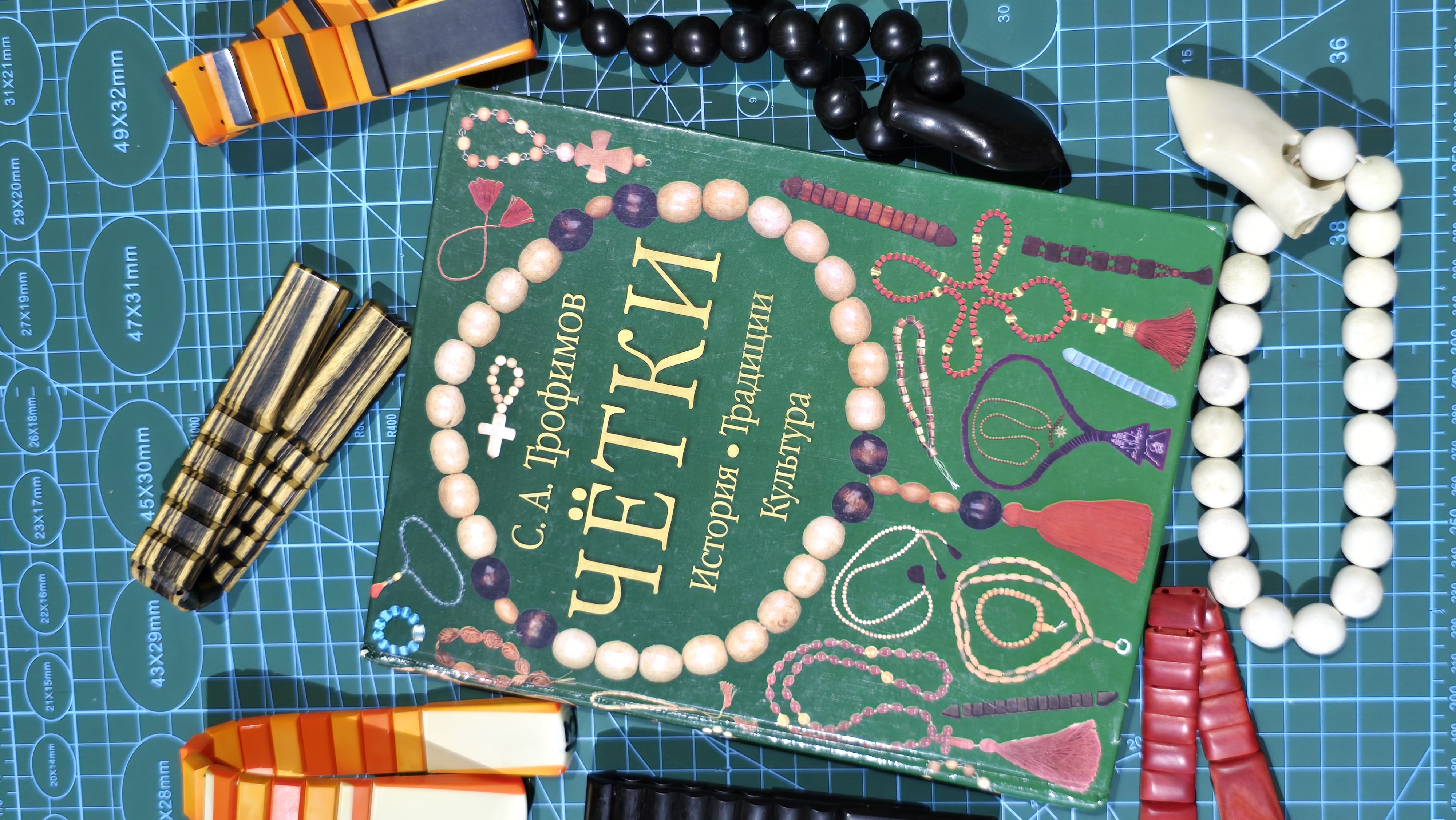
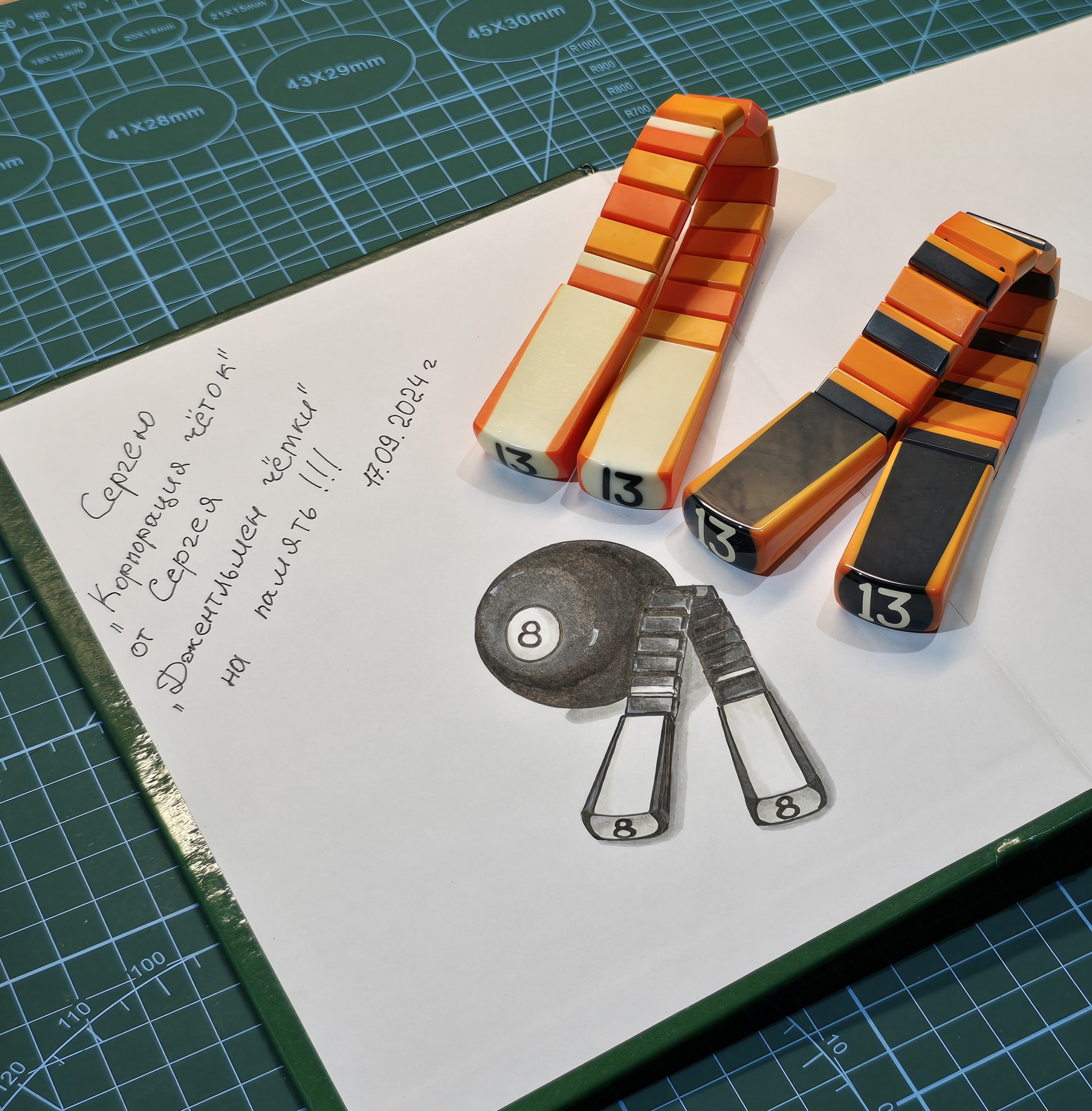
Origins according to S. A. Trofimov
According to S. A. Trofimov’s book “Prayer Beads: History, Traditions, Culture”, the history of prayer beads did not begin with Christianity, Islam or Buddhism, but much earlier in remote antiquity. The author writes that the first beads appeared in ancient India roughly 15,000 years ago, long before the Common Era. The book does not assign their appearance to a particular century; it stresses that they had existed “since time immemorial”.
Their first owners were exclusively Brahmin priests, members of the highest caste of ancient Indian society. Ordinary people were forbidden to wear them. The beads were neither jewelry nor an everyday object, but a sacred sign of initiation, spiritual authority and membership of an elect group. Their owner thereby showed a special religious status and the right to conduct sacred rites and mediate between people and the gods.
The earliest beads were black and were called Rudraksha, translated as “the eyes of Rudra”. In the author’s account, they represented the all-seeing eye of the deity and were a sign of spiritual knowledge, wisdom and the highest initiation. The right to wear them therefore belonged only to Brahmins, and use by lower castes was treated as a serious breach of the established order.
Their original purpose was therefore not to count prayers. Above all, they were a religious sign of a person’s spiritual position, higher-caste status, connection with the divine world and right to perform sacred acts. Only many centuries later did prayer beads spread to other religions and peoples and gradually acquire the familiar role of counting prayers and spiritual practices.
Prayer beads in world religions
According to Trofimov, prayer beads gradually entered the world’s religions, retaining the shared idea of focused prayer while developing distinct features in each tradition.
1. Brahmanism (Hinduism) — the oldest prayer beads
The book presents Brahmin beads as the earliest form, existing in ancient India about 15,000 years ago. They were worn only by Brahmin priests. The first black Rudraksha beads, the “eyes of Rudra”, symbolized the all-seeing deity, higher-caste status, spiritual authority and the right to conduct sacred rites. Ordinary people were forbidden to wear them.
2. Buddhism
Buddhist beads appeared later, after Buddhism emerged in the sixth to fifth centuries BCE. The author stresses that the Buddha did not invent prayer beads, but adopted an existing Brahmin tradition and gave it new spiritual meaning. A classic Buddhist mala has 108 beads and was commonly made from bodhi seeds, sandalwood and other woods, as well as coral, crystal or stone. Its principal purpose became counting mantras and cultivating inner concentration on the path to Enlightenment.
3. Christianity
Prayer beads spread through Christianity much later. The book associates their use with the first Christian monks and dates their firm establishment to approximately the fourth century CE, in the time of Pachomius the Great. At first, a simple knotted rope helped monks who could not read count prayers and prostrations. It was later followed by lestovka prayer ropes and beads made from wood or bone. Their purpose was continuous prayer and spiritual discipline.
4. Catholicism
In Western Christianity, the Catholic rosary took its established form around the eleventh to thirteenth centuries. The author links this development to the Crusades and European contact with Eastern prayer traditions. The classic Catholic rosary is a closed strand with a cross and groups of beads for a sequence of the Lord’s Prayer, the Hail Mary and other prayers. It became both a tool of prayer and an important symbol of Catholic faith.
5. Islam
According to the book, Muslim prayer beads emerged after the rise of Islam in the seventh century CE. The most common form has 99 beads corresponding to the ninety-nine beautiful names of Allah; 33-bead versions are also passed through three times during prayer. Traditional tasbih were made from wood, bone, amber, stone and other natural materials and often use elongated separators or a tassel. Their primary purpose is dhikr, praise of Allah and concentration in prayer.
General conclusion from the book
Trofimov argues that the world’s religions use prayer beads differently, but share the central purpose of helping a person focus on prayer, spiritual practice and inner development. He considers Brahmin beads the oldest and presents them as an antecedent, to varying degrees, of later Buddhist, Christian and Islamic traditions. The sequence and the character of each tradition are set out in “Prayer Beads: History, Traditions, Culture”.
Historical sequence
- ≈ 15,000 years ago
Brahmanism · Ancient India
- The first black prayer beads were called Rudraksha.
- Only Brahmin priests wore them.
- They symbolized spiritual authority and the highest caste.
- 6th–5th c. BCE
Buddhism
- The Buddha adopted an existing tradition.
- The classic mala has 108 beads.
- It is used for mantras and spiritual practice.
- 4th c. CE
Eastern Orthodox Christianity
- The first monastic prayer beads were a knotted rope.
- The tradition is associated with Pachomius the Great.
- They counted prayers and prostrations.
- 7th c. CE
Islam
- Muslim prayer beads become established.
- The most common forms have 99 or 33 beads.
- They are used for dhikr, the praise of Allah.
- 11th–13th c. CE
Catholicism
- The classic rosary takes shape.
- Its modern structure uses a cross and groups of beads.
- It supports ordered prayer and contemplation.
- 18th–19th c. CE
The Caucasus · Flip worry beads
- The book places the emergence of flip worry beads in the Caucasus.
- They spread among mountain peoples.
- Their flat form served both prayer and constant handling.
- 20th–21st centuries
The present day
- Prayer beads are used across the major world religions.
- Flip worry beads continue as a distinct cultural tradition of the Caucasus and former Soviet countries.
Buddhism: the world religion in which prayer beads are integral to the spiritual tradition
Buddhism preserves ancient written sources that describe in detail how prayer beads should be made, what materials to use, how many beads they should contain and the meaning of each part. Other world religions have no directly comparable guides. Neither the Bible nor the Quran identifies prayer beads as a required attribute. In Christianity and Islam they became part of prayer through established custom, while in Buddhism they have occupied a distinct place in religious life and spiritual practice from an early stage.
5.1. The emergence of Buddhist prayer beads
Buddhist malas are among the world’s oldest prayer beads. Their history begins in India, where bead-based prayer practices existed long before Buddhism. After Buddhist teaching emerged, the tradition was retained and developed further.
Buddhist beads quickly spread beyond India to China, Tibet, Mongolia, Korea, Japan, Nepal, Sri Lanka and other Asian countries. Nearly every Buddhist school retained them, although their appearance, materials and construction details could differ.
For a Buddhist, a mala was never merely an ornament. It was a vital spiritual tool used for mantras, prayers, meditation and other practices. Passing the beads through the fingers allowed complete focus on prayer without distraction from counting repetitions.
Particular care was given to making the mala. It was created not as an ordinary object but as a sacred instrument intended to accompany a person throughout spiritual life. Every part therefore carries its own meaning and symbolism.
Buddhist tradition treats prayer beads as a means of spiritual refinement. Repeating prayers and mantras helps cleanse awareness, loosen destructive attachments and support gradual inner development.
This is why the mala became inseparable from monastic life. It is difficult to imagine a Buddhist monk without prayer beads: they accompany daily prayer, meditation and many other spiritual practices.
5.2. Why Buddhist malas have 108 beads
The most widespread Buddhist mala has 108 beads. The number is sacred and carries deep symbolic meaning.
The number 108 is associated with several Buddhist ideas. It represents the completeness of the spiritual path, the fulfillment of inner refinement and the overcoming of worldly attachments.
The book offers several explanations for the origin of the number.
One relates it to the twelve months of the year and the nine months of human development before birth. Multiplying twelve by nine gives 108, interpreted here as a symbol of life’s continuity and the recurring cycle of existence.
The number 108 is also understood as the many human conditions, thoughts and manifestations of consciousness that must be overcome on the path of spiritual development.
Many Buddhist prayers are therefore repeated 108 times. One complete circuit of a 108-bead mala corresponds to 108 recitations of a prayer or mantra and completes one prayer cycle.
Other Buddhist forms also exist. Depending on the school, malas may have 18, 21, 27, 36, 54 or other numbers of beads. These are reduced or specialized versions of the classic 108-bead mala used for particular practices.
The prayer beads of great masters and teachers occupy a special place.
According to the book, one cycle is not enough for beads to become fully sacred: 108,000 complete cycles are required, amounting to 11,664,000 repetitions of a prayer or mantra. Beads that had accumulated this practice were no longer treated as an ordinary prayer object. They became major relics, placed inside stupas or built into the walls of monasteries and temples so that their accumulated spiritual force could continue to sanctify the place and benefit future generations.
Old malas belonging to great Buddhist teachers were therefore almost never destroyed. They were carefully preserved as some of a monastery’s most important sacred objects.
5.3. The cord of a Buddhist mala
The cord is the foundation of a Buddhist mala and carries deep symbolic meaning. It joins the beads into one whole, representing the continuity of the spiritual path, the unity of the Buddha’s teaching and the interconnection of all living things. Without the cord, each bead becomes separate and the mala loses its purpose.
The color of the cord also matters. Buddhist traditions use both single-color cords and cords braided from five colors, most commonly blue, white, red, green and yellow. Each has its own symbolism; together they represent harmony, wisdom, purity, compassion and spiritual strength.
Cord colors differ between schools according to local traditions and forms of practice. A cord may therefore indicate a connection to a particular school or monastery.
The cord also calls for respectful treatment. When damaged, it should be replaced in accordance with the relevant tradition. In many monasteries, an experienced monk or teacher is expected to fit the new cord so that continuity of practice and the spiritual meaning of the mala are preserved.
5.4. The tassel of a Buddhist mala
The tassel is an integral part of a traditional Buddhist mala and carries important spiritual meaning. It completes the construction, symbolizing fulfillment of the spiritual path, wisdom and inner harmony. It is not treated simply as decoration, but as a sign of respect for prayer and spiritual discipline.
The tassel has particular meaning in monastic life and is sometimes described as a monk’s “passport”. Its color, form, length and method of construction can indicate a Buddhist school or monastery, a spiritual tradition, level of initiation and position within the monastic community.
Different Buddhist schools use tassels of different colors. Like cord colors, they have their own symbolism and reflect particular spiritual qualities. In some traditions the tassel matches the cord, emphasizing the unity of the object and its meaning.
The tassel is made with special care and should harmonize with the whole mala. Because every element is considered meaningful, the tassel is both the construction’s final element and an important part of its spiritual symbolism.
5.5. Materials used for Buddhist malas
Buddhist prayer beads have been made from a wide range of materials over many centuries. The choice depended on local traditions, the owner’s means, the purpose of the mala and the Buddhist school. Whatever the material, spiritual purpose and regular use in prayer and meditation mattered more than outward luxury.
Different woods were the most common materials. Trees regarded as sacred or associated with longevity, wisdom and inner harmony were particularly valued. Wooden malas were light, comfortable for daily practice and widely used by both monks and laypeople.
Buddhist beads were also made from seeds, nuts, fruit stones, natural stone, bone, horn, metal and other natural materials. Each could carry its own symbolism and serve a specific practice; in some cases the material was chosen according to the purpose of a prayer or rite.
Natural origin was especially valued. Natural materials were believed to sustain a connection with the surrounding world, aid concentration in meditation and recall the simplicity, naturalness and harmony central to Buddhist teaching.
Over time, different countries developed their own mala-making traditions. Despite variations in material and design, the main purpose remained constant: to focus the mind in prayer, count mantra repetitions and provide a continual reminder of the path to Enlightenment.
Features and intended use
Peribory have many different features and uses. They are not primarily intended for powerful flips or spins; they are made for relaxation, calm handling, prayer and meditation.
If you buy prayer beads for quiet handling during meditation, a journey or a walk, I recommend an organic material such as wood or bone. The first priority is a surface that feels pleasant to the touch.
When choosing Peribory, first decide what you need them to do: pass through the fingers, hang in a car, travel in a pocket or remain in a collection. Do you need a collector piece or everyday beads? Once the purpose is clear, the right choice becomes much easier.
Peribory occupy a major place in the world of prayer beads and are distant ancestors of many modern forms. The choice is immense. Define the purpose first, then choose the beads that suit your hand and your own enjoyment; the right piece will be immediately recognizable.
Additional information based on collectors’ real-world experience
Bead size and count
First, a large bead is surprisingly comfortable and satisfying to handle. The ideal diameter is 14 to 16 millimeters: this is the sweet spot.
A classic version of this type usually has 21 beads. Alexander of Luxury Euro Chetki established this combination, and 21 large beads with a diameter of 14–16 mm became one of the model’s most recognizable arrangements.
For maximum enjoyment, choose beads 14–16 millimeters in diameter. Round beads, olives or elongated olive forms are a matter of personal taste.
Whatever material you choose, a large bead reveals its character much more expressively.
Mammoth ivory looks magnificent at this scale. The same applies to luxury woods such as Macassar ebony, grenadill, Pink Ivory, lignum vitae and others. All these materials reveal their grain and character beautifully and unusually in large beads.
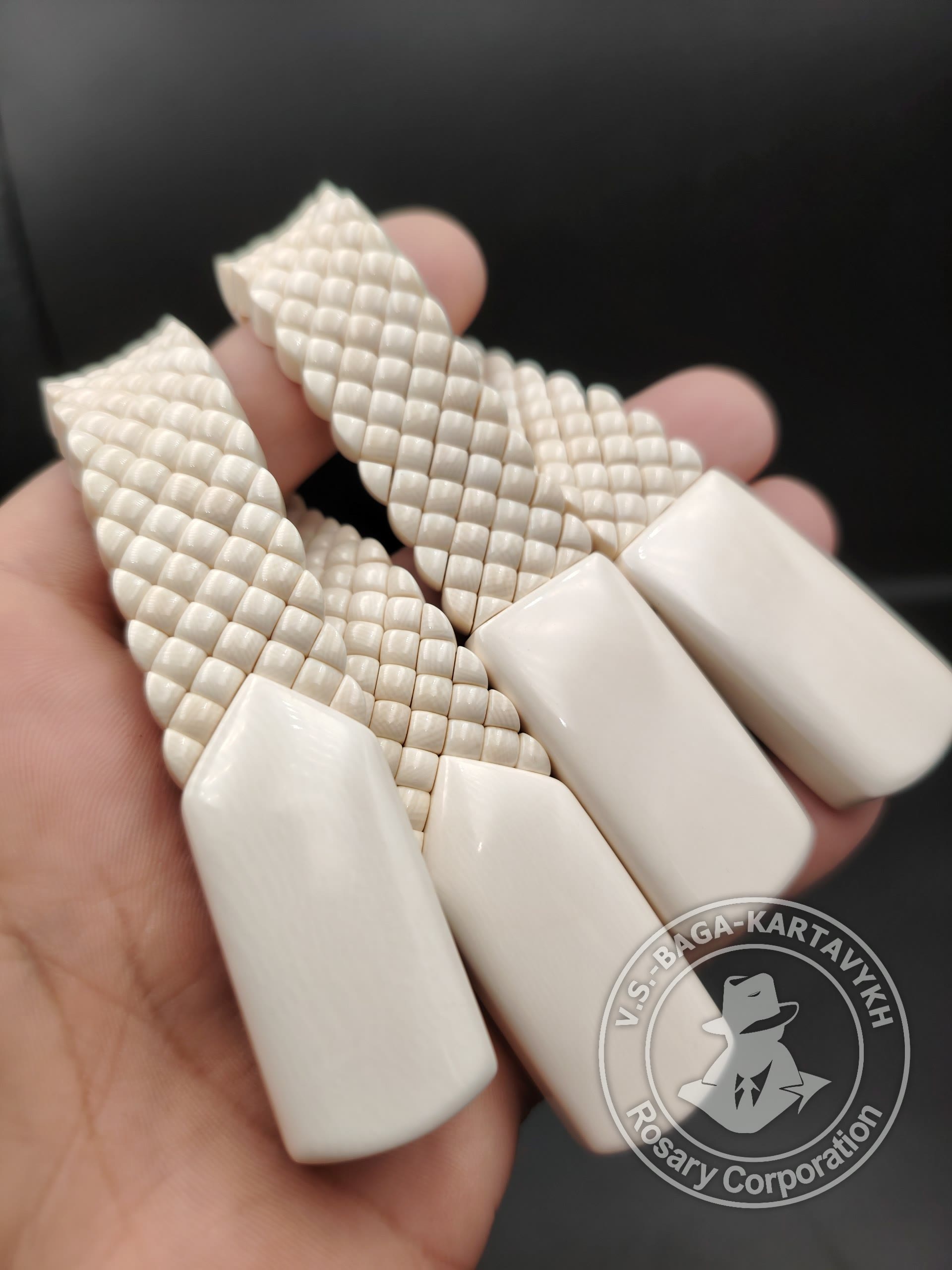
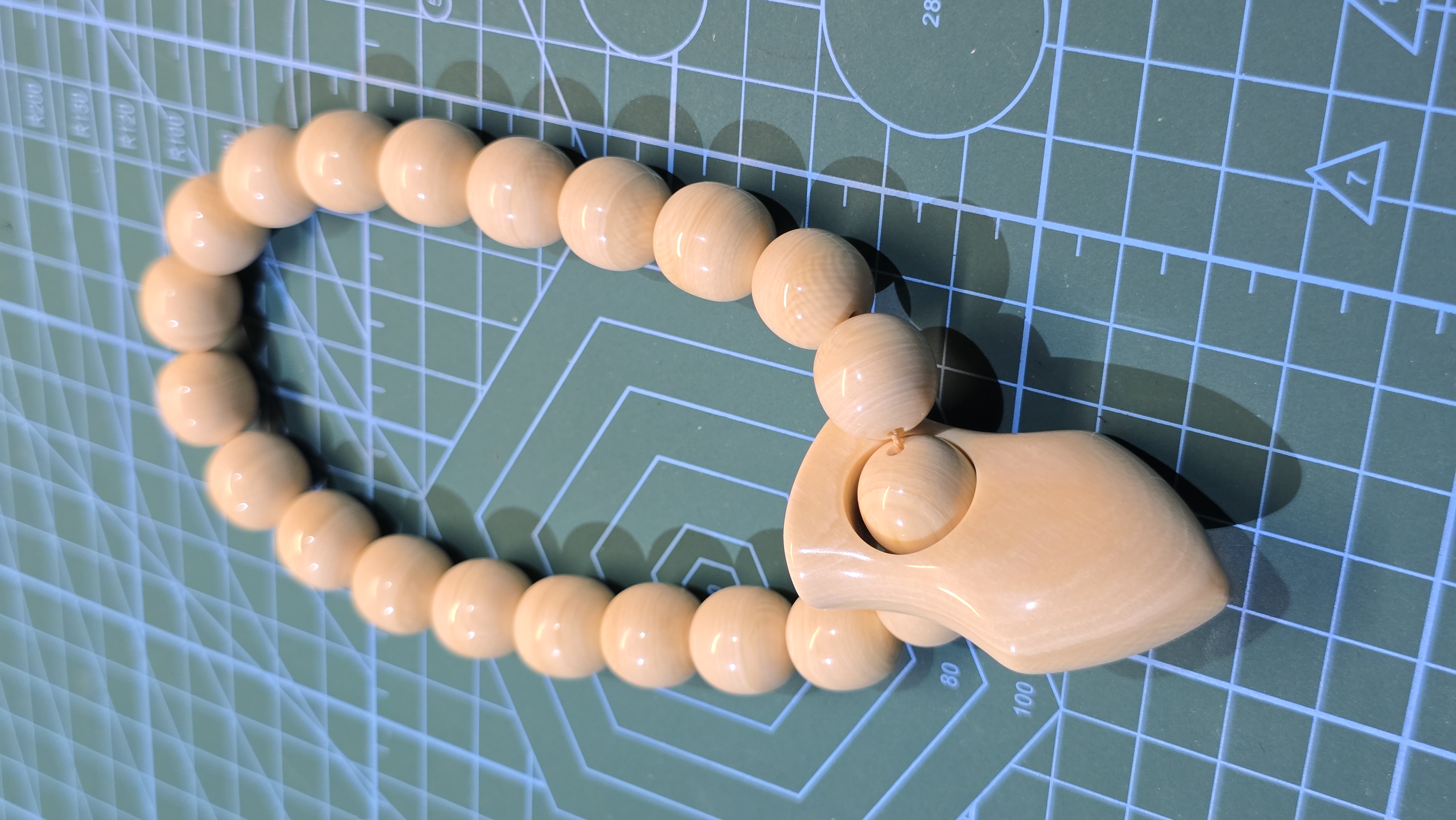
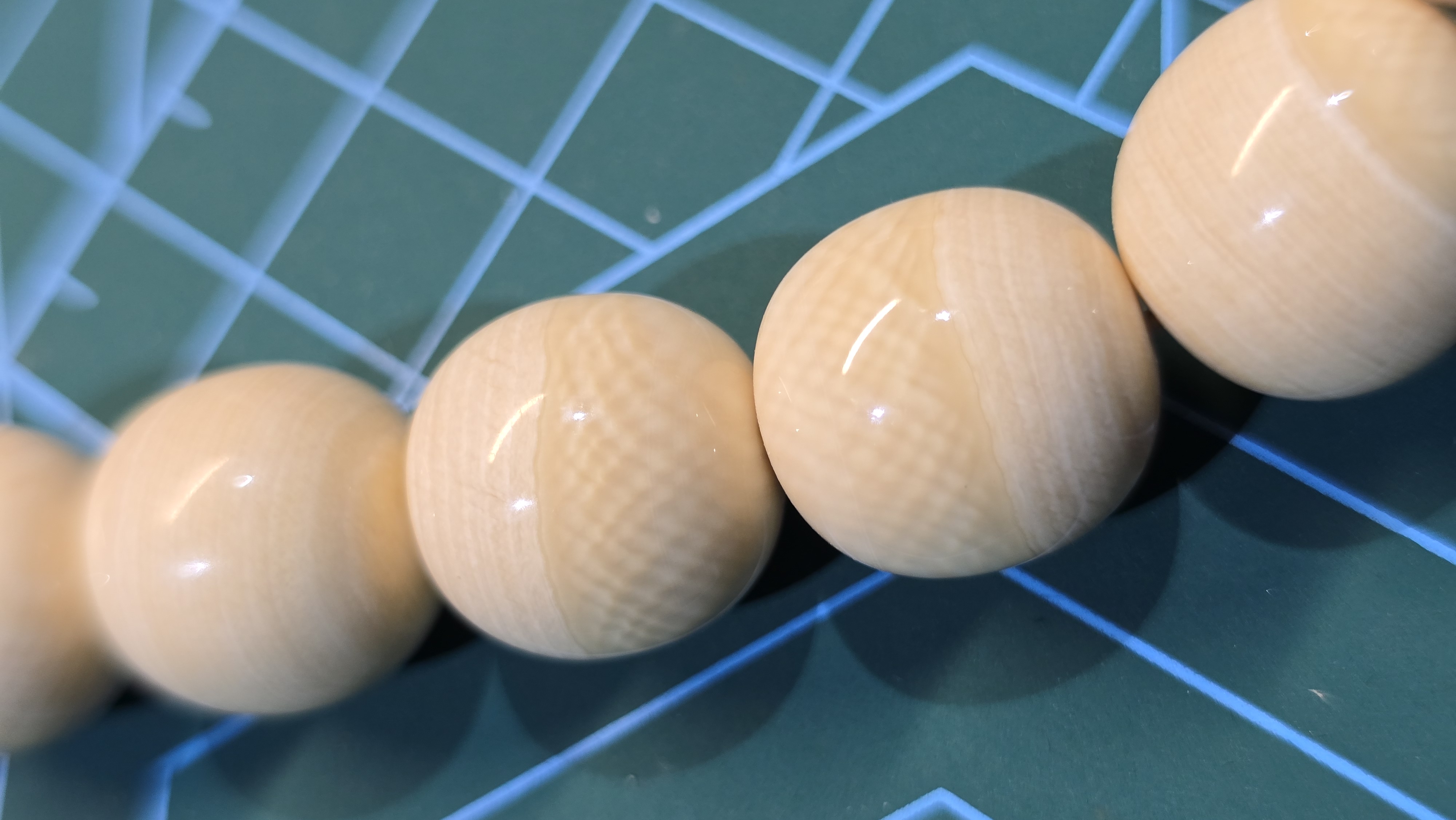
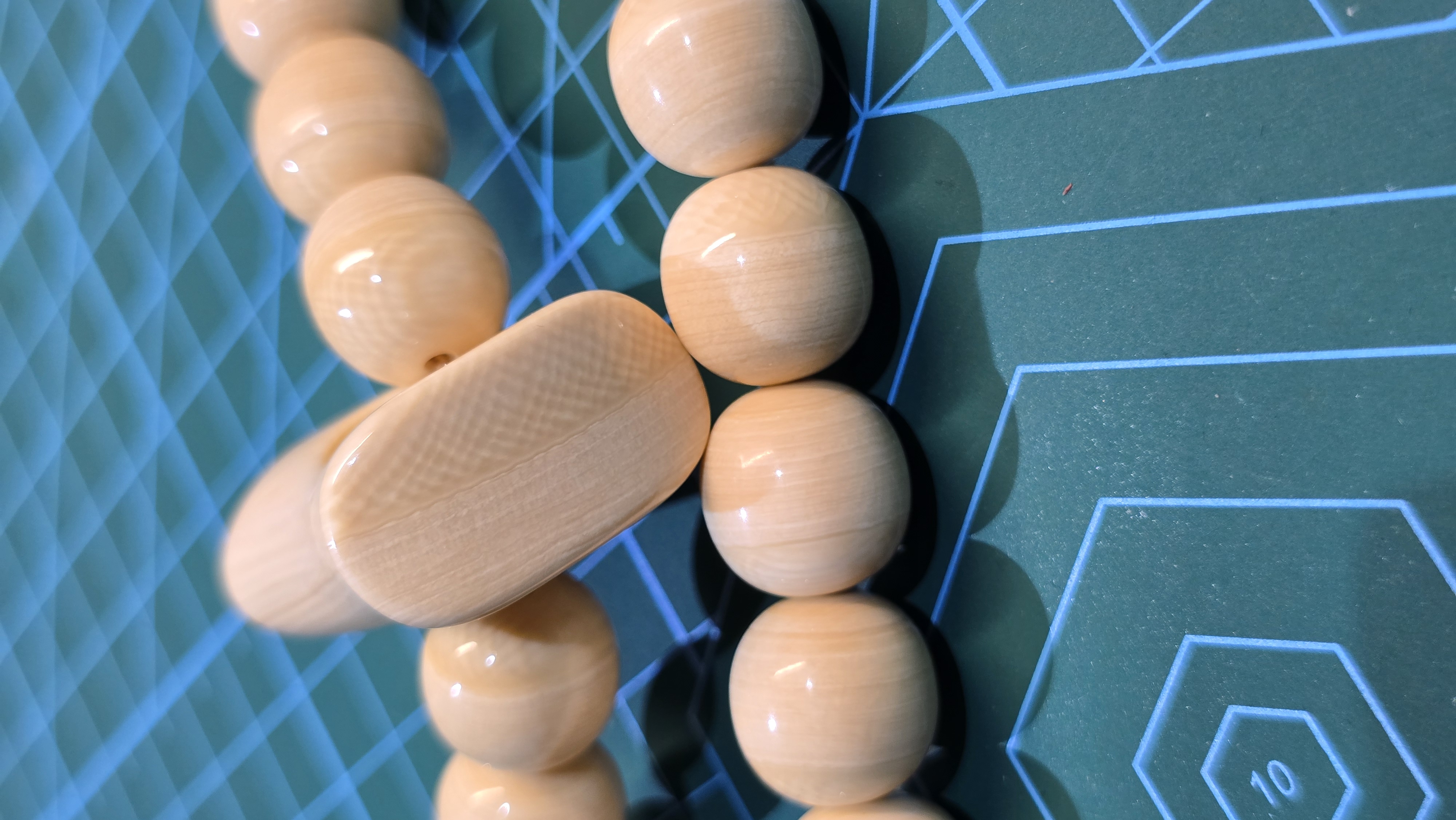
Mammoth-ivory Peribory worry beads made by Zhenya Kartavykh. The piece is held in the author’s collection.
The Arrow runner and the model’s history
The runner construction also deserves special mention. Sliding runners began to become fashionable around 2022–2023, when Peribory with this element were only starting to gain popularity.
Many collectors know the Peribory whose runner itself is shaped like an arrow.
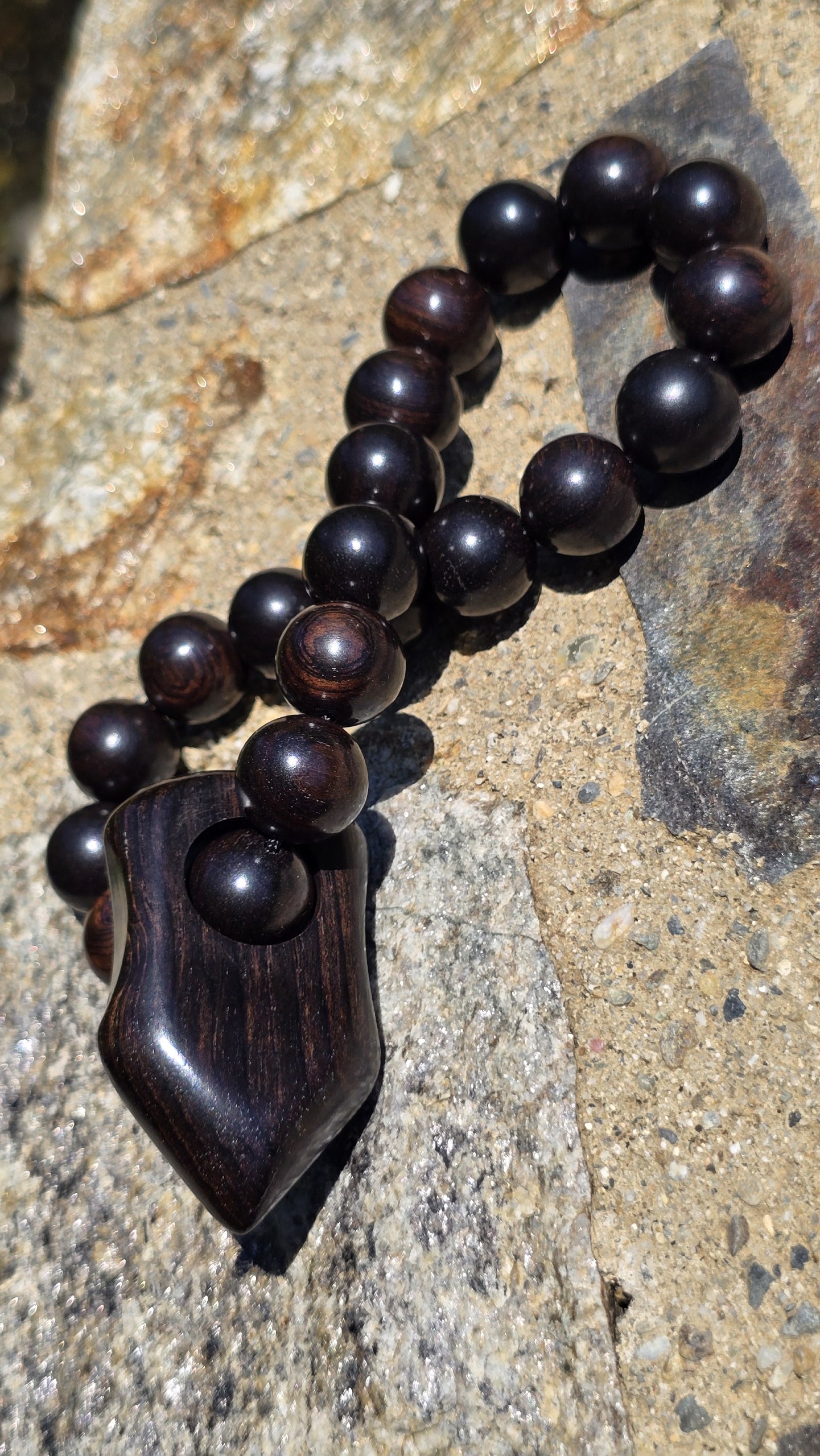
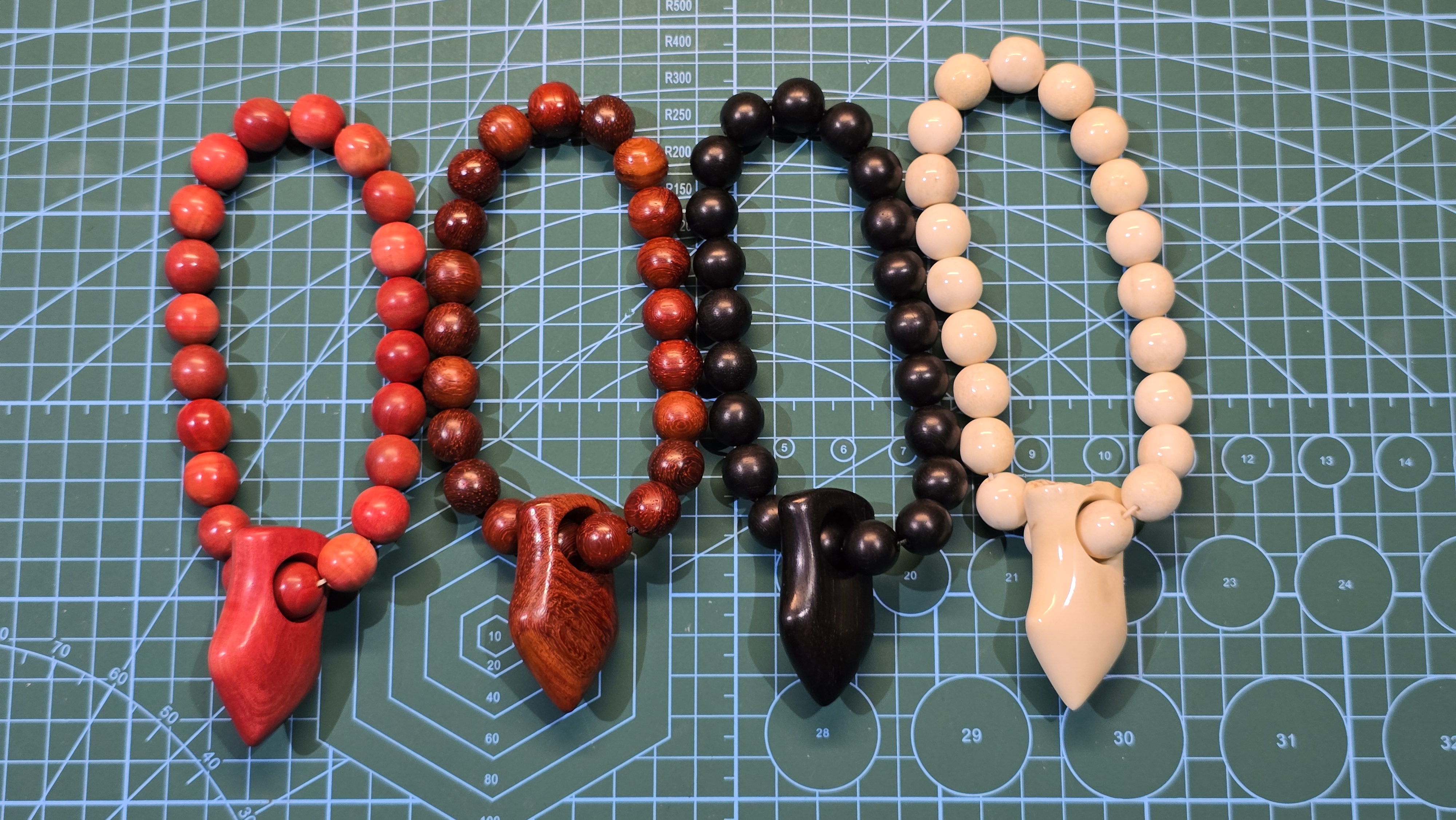
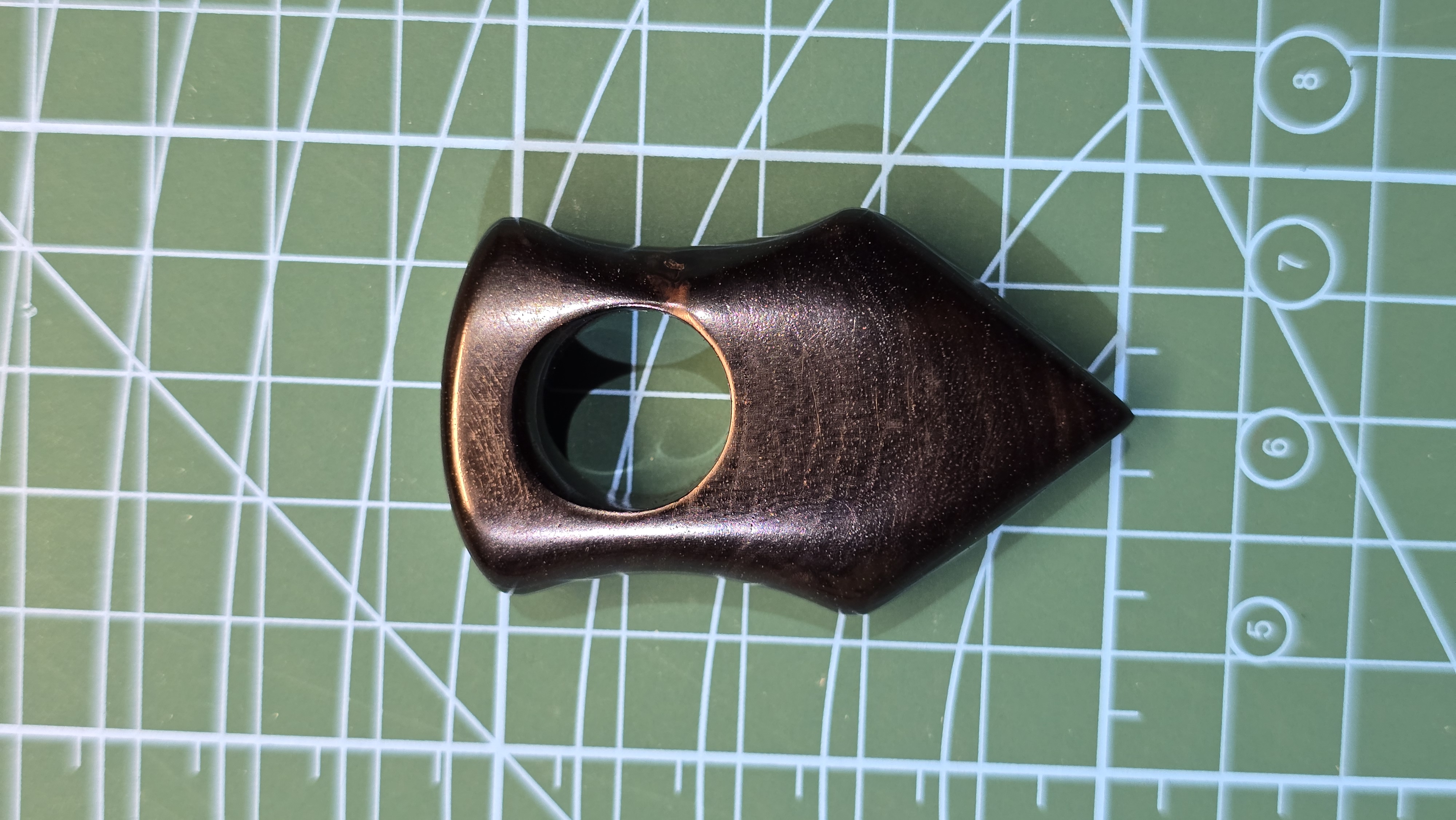
I made the first runner of this kind on 28 September 2022 from cow bone that I had prepared myself.

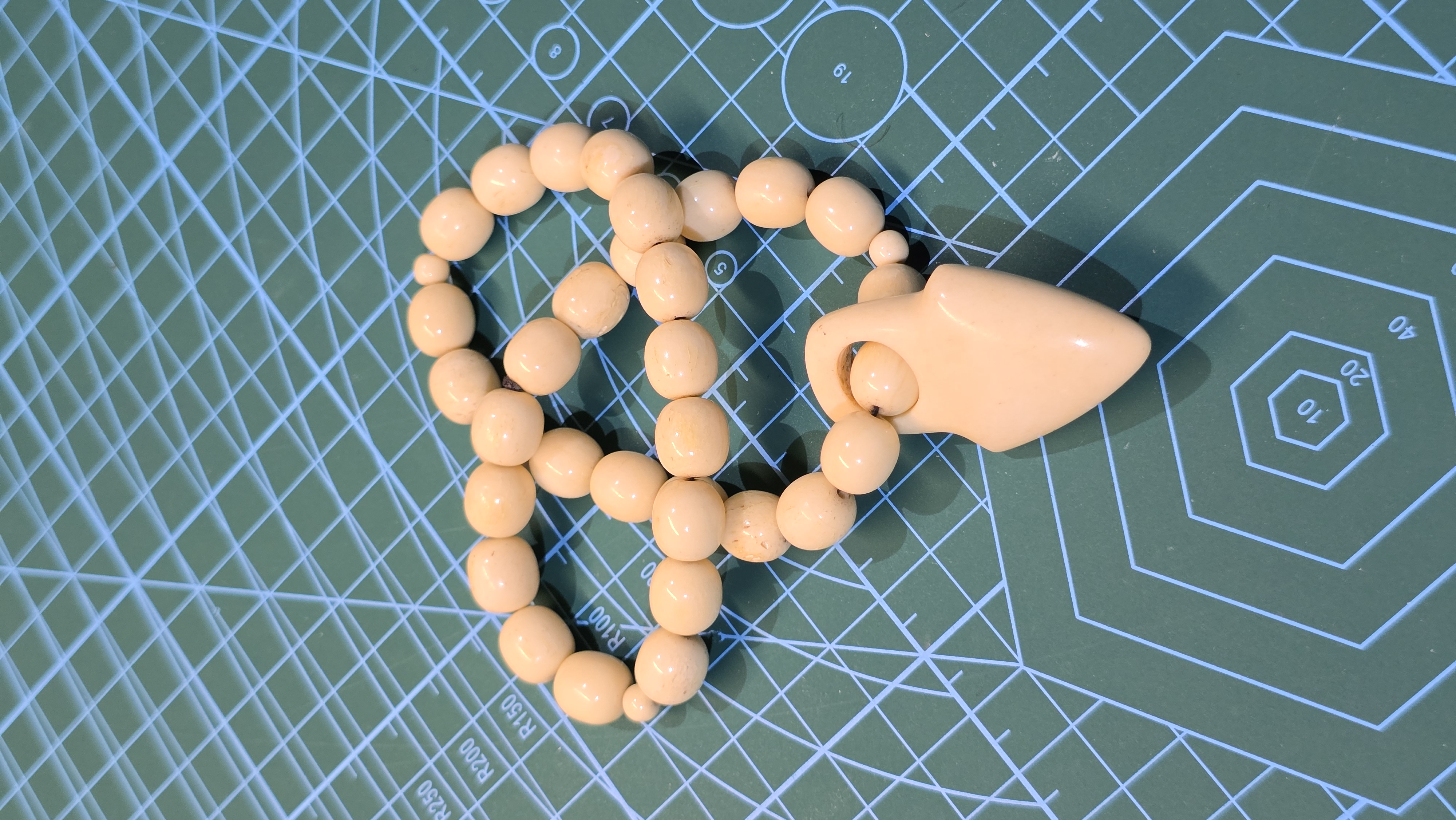
At that time I already knew Alexander of Luxury Euro Chetki. I showed him the piece, he liked it and modified the construction.
His modification was so successful that the entire worry-bead community adopted it. I liked this version too, even more than the original.
People should know the history of these beads and this model.
Alexander added a large bead to the construction. These legendary prayer beads, worthy of being called an all-time classic, remain extremely popular and are known to practically every enthusiast.
Alexander of Luxury Euro Chetki created one of the most comfortable and compact Peribory constructions.
Although the original idea came from my work, Alexander made the much greater contribution to popularizing the model.
If your collection has no Peribory in this form, an important piece of the overall picture is still missing.