
Snake worry beads: archive
There are no finished pieces in stock right now. Use an archived work as a reference to discuss a similar model, material and budget.
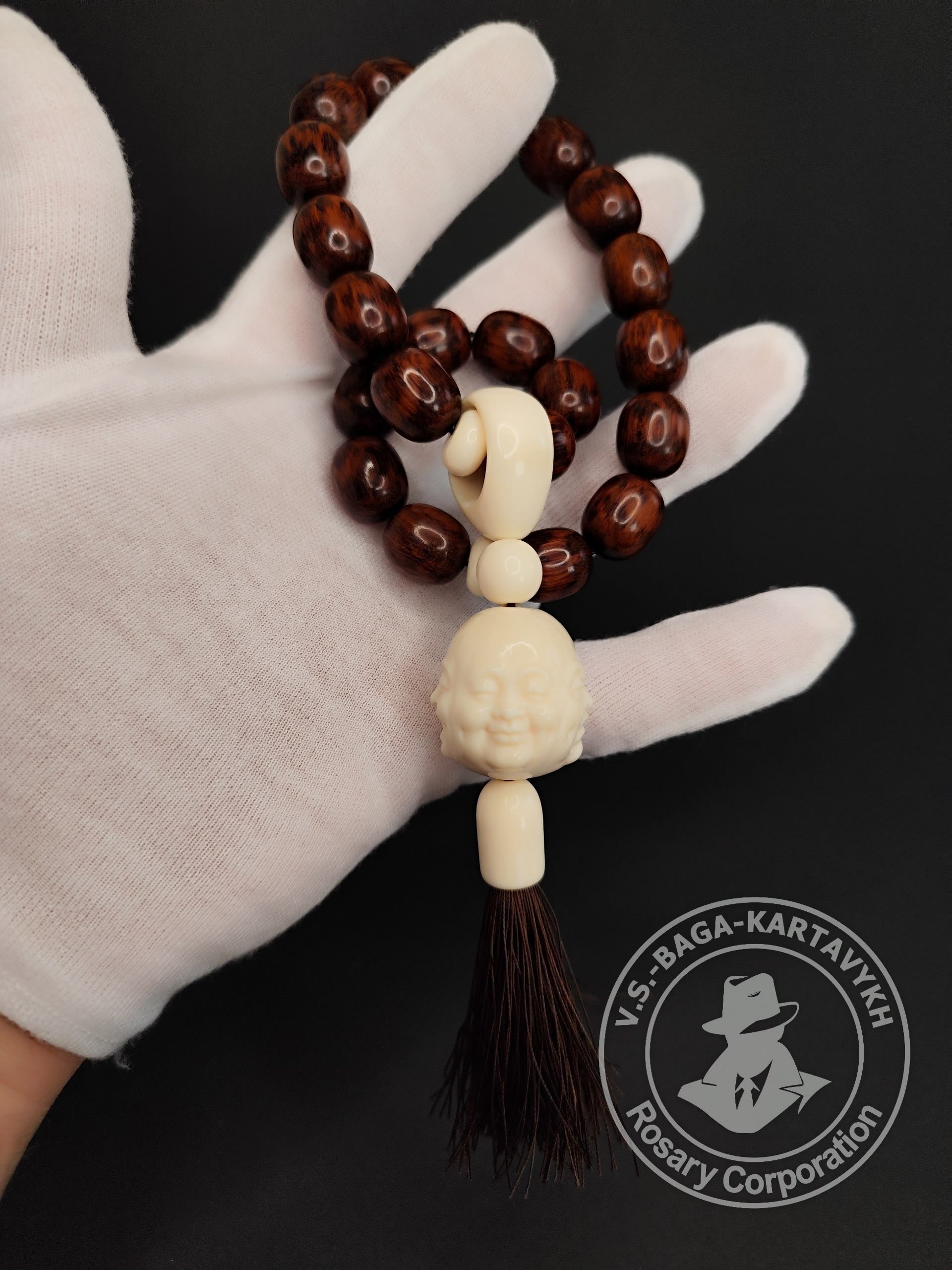
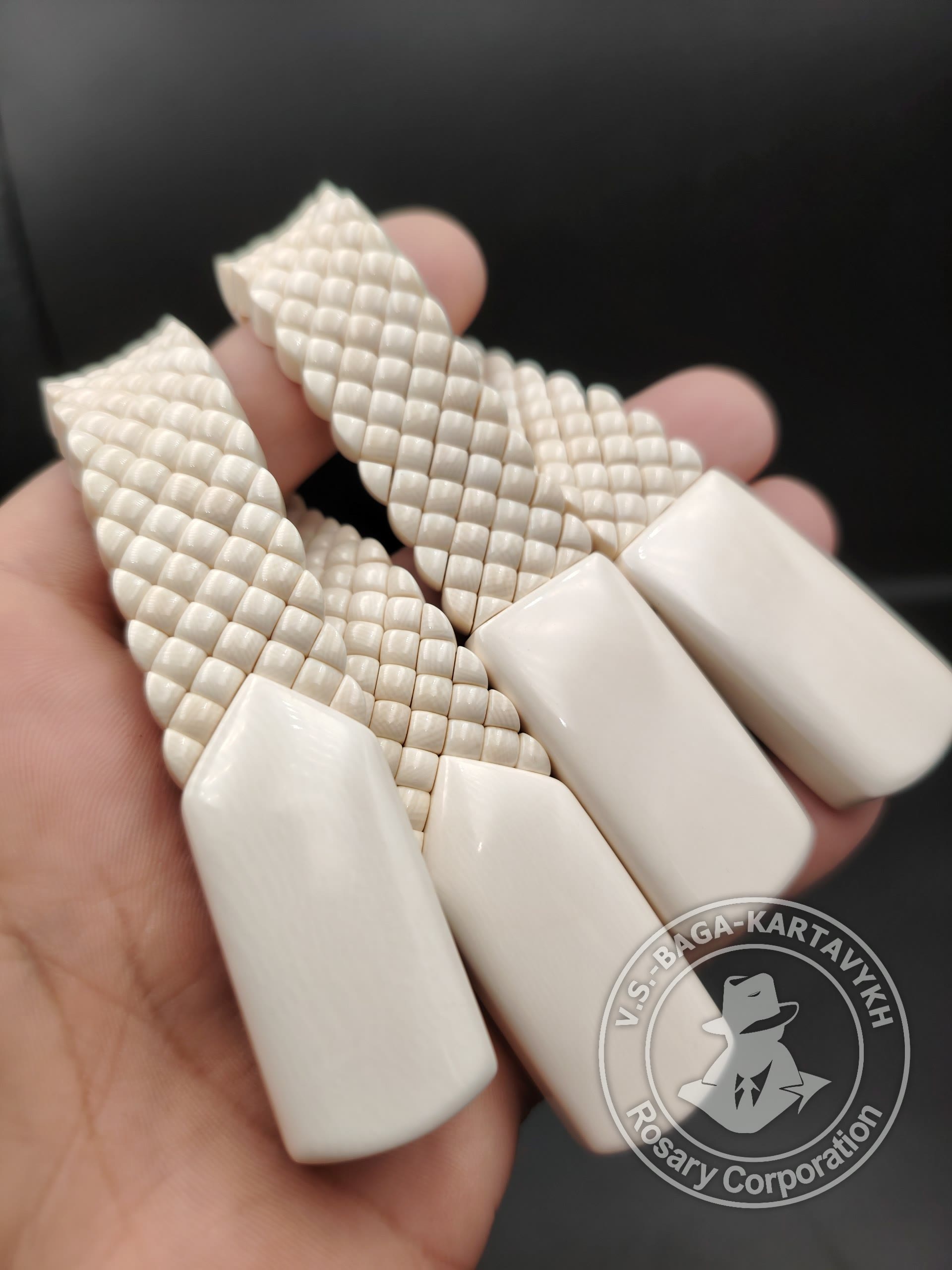
Peribory worry beads — elephant ivory, no. 873
Peribory in elephant ivory, 81 g, one of a kind

Snake worry beads — Aramith bowling ball, no. 777
Snake in Aramith bowling ball, 40.3 g, one of a kind

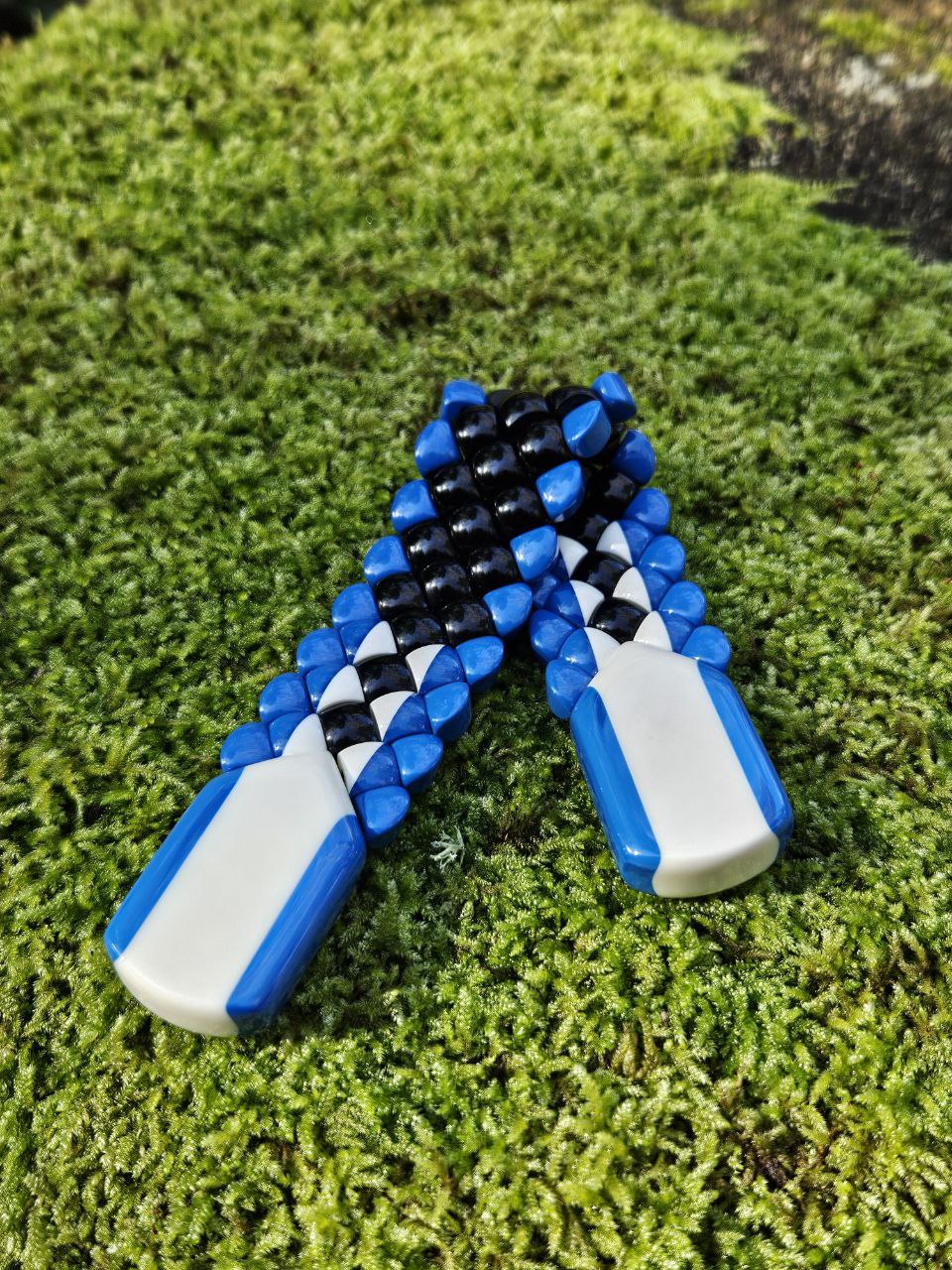
Snake worry beads — German colored ebonite, no. 762
Snake in German colored ebonite, handmade by Aleksey

Snake worry beads — German colored ebonite, no. 761
Snake in German colored ebonite, 40 g, one of a kind

Snake worry beads — Aramith bowling ball, no. 738
Snake in Aramith bowling ball, handmade, one of a kind

Snake worry beads — juma, no. 731
Snake in juma, handmade by Valentin

Snake worry beads — buffalo horn, no. 694
Snake in buffalo horn, 44.2 g, one of a kind

Cushions worry beads — exotic wood, no. 580
Cushions in exotic wood, 39 g, one of a kind

Snake worry beads — Aramith billiard ball, no. 398
Snake in Aramith billiard ball, 44 g, one of a kind
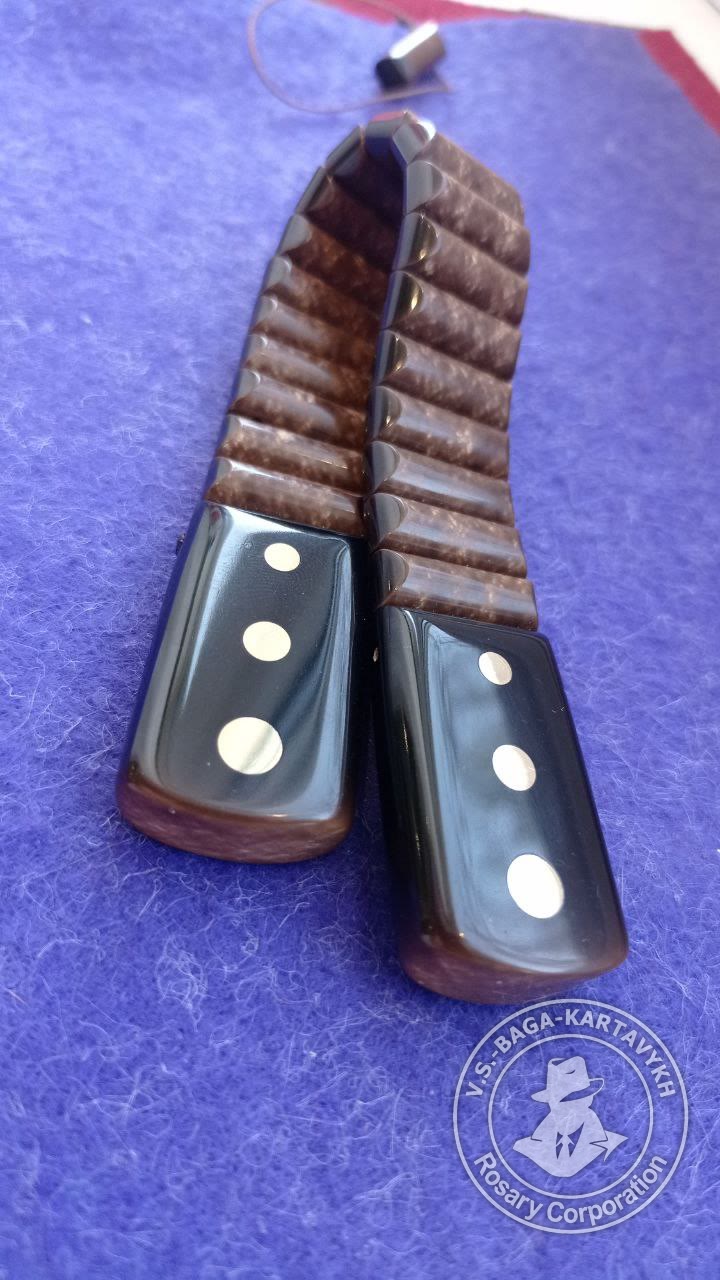
Snake worry beads — Soviet ebonite, no. 245
Snake in Soviet ebonite, handmade by Zhenya Kartavyh

Snake worry beads — Aramith billiard ball, no. 216
Snake in Aramith billiard ball, handmade, one of a kind

Snake worry beads — Aramith billiard ball, no. 210
Snake in Aramith billiard ball, handmade by Zhenya Kartavyh

Snake worry beads — Soviet ebonite, no. 172
Snake in Soviet ebonite, handmade, one of a kind

Snake worry beads — Soviet ebonite, no. 163
Snake in Soviet ebonite, handmade, one of a kind

Snake worry beads — Soviet ebonite, no. 122
Snake in Soviet ebonite, handmade by Valentin

Snake worry beads — Soviet ebonite, no. 118
Snake in Soviet ebonite, handmade, one of a kind

Snake worry beads — Soviet ebonite, no. 98
Snake in Soviet ebonite, handmade by Valentin

Snake worry beads — Soviet ebonite, no. 37
Snake in Soviet ebonite, 38 g, one of a kind

Snake worry beads — Soviet ebonite, no. 36
Snake in Soviet ebonite, handmade, one of a kind

Snake worry beads — Soviet ebonite, no. 35
Snake in Soviet ebonite, handmade, one of a kind

Snake worry beads — Soviet ebonite, no. 32
Snake in Soviet ebonite, 37 g, one of a kind

Snake worry beads — Soviet ebonite, no. 9
Snake in Soviet ebonite, 35 g, one of a kind

Snake worry beads — Soviet ebonite, no. 8
Snake in Soviet ebonite, 35.5 g, one of a kind

Snake worry beads — Soviet ebonite, no. 7
Snake in Soviet ebonite, handmade, one of a kind

Snake worry beads — Soviet ebonite, no. 6
Snake in Soviet ebonite, handmade, one of a kind
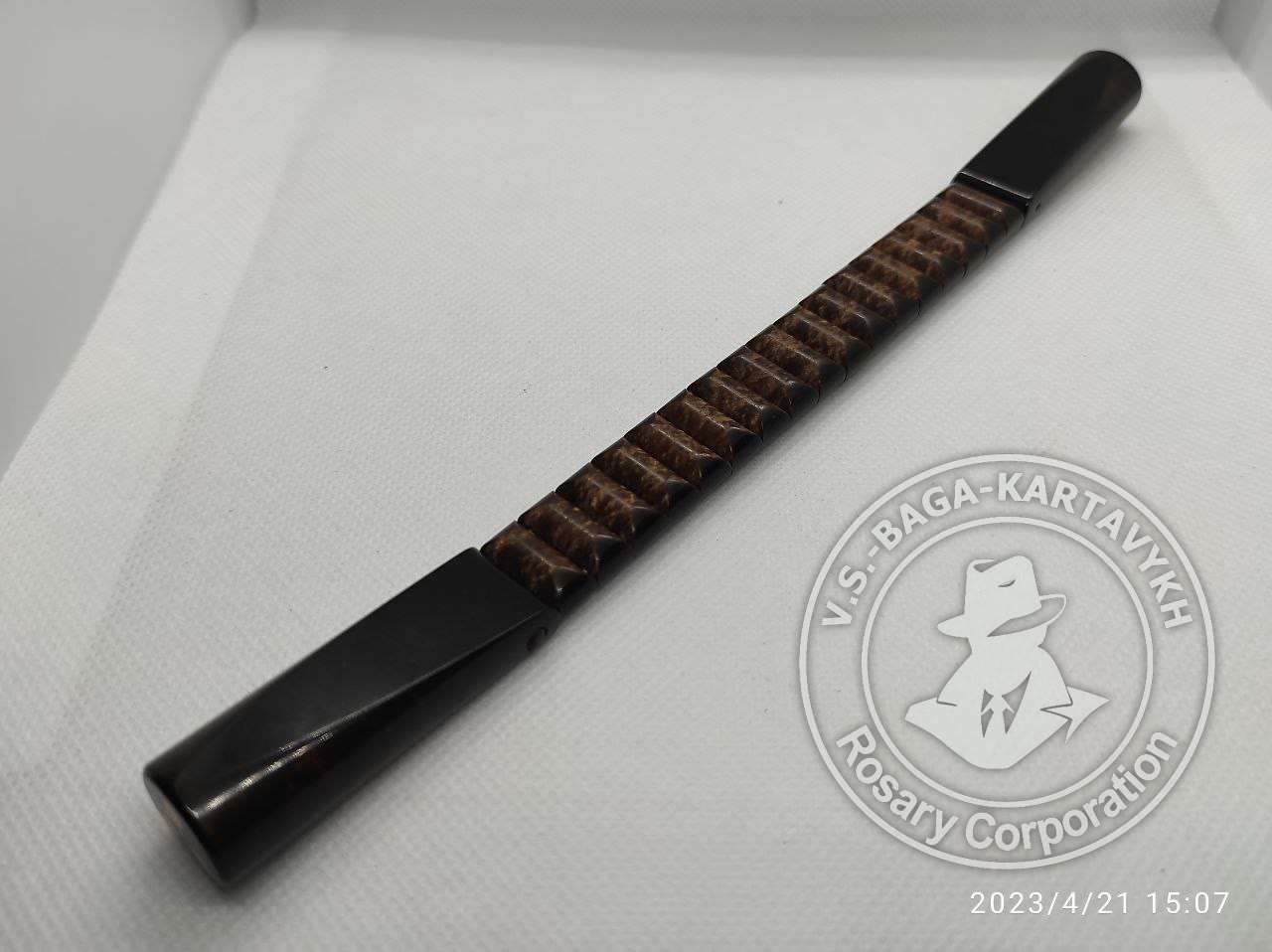
Snake worry beads — Soviet ebonite, no. 3
Snake in Soviet ebonite, handmade by Zhenya Kartavyh
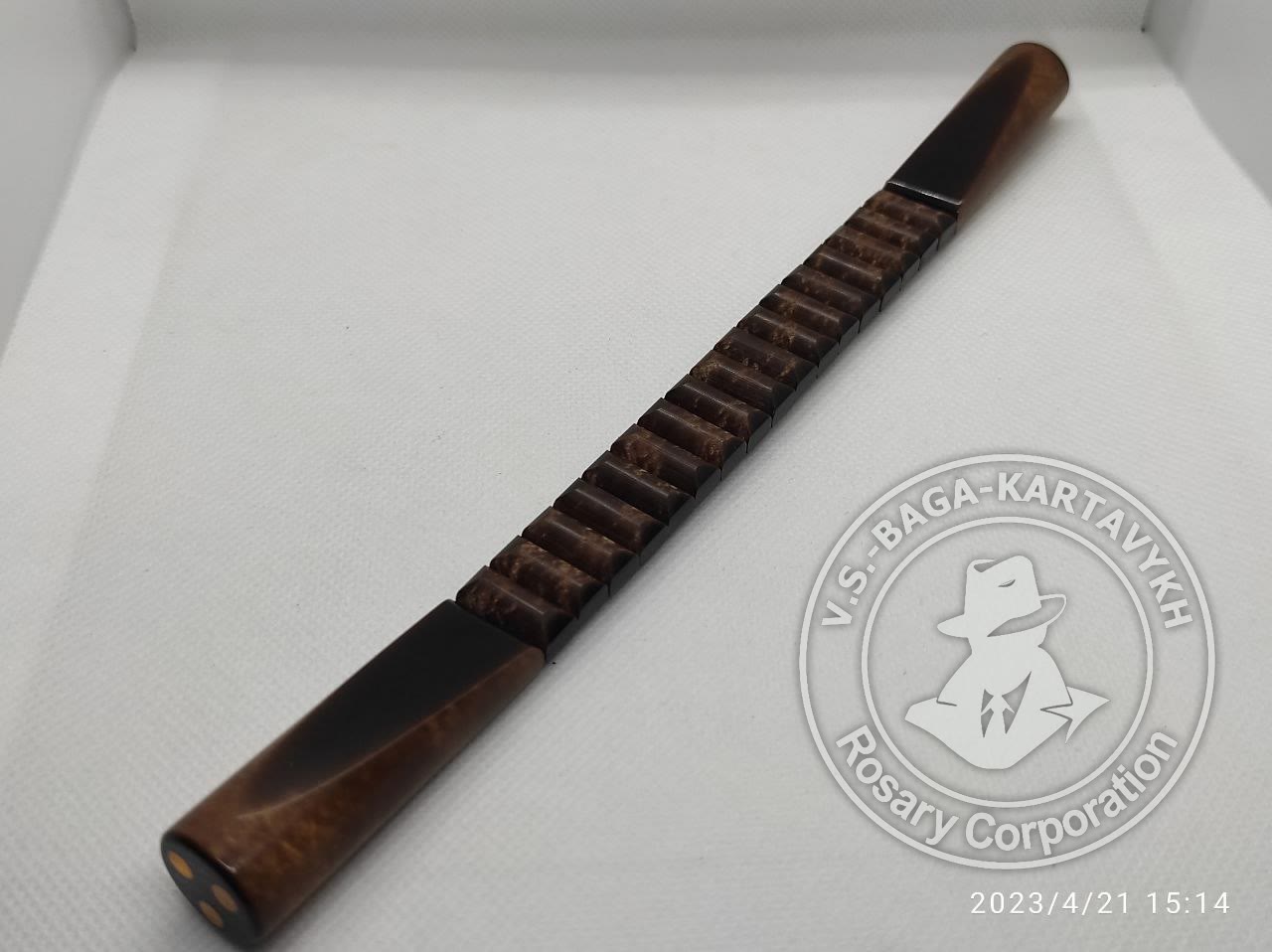
Snake worry beads — Soviet ebonite, no. 2
Snake in Soviet ebonite, handmade, one of a kind
No pieces match these filters. Change the selection or reset the filters.
Snake is a string in which the pattern, or the bead form itself, builds into a continuous wavy line that snakes along the whole strand. The name is pictorial — the pattern or bead rhythm creeps down the cord in a smooth S-shaped motion, like a snake's body. The effect is achieved in various ways: by alternating directional carving, a diagonal lay of mosaic segments, or a spiral orientation of the grain's texture — but in every case it demands a carefully judged sequence so the line runs without breaks or stumbles of rhythm. Snake is worked with the pleasure of looking: turned to the light the wave comes alive and flows across the surface, making it equally a tactile and a visual piece. The surface is usually smooth or softly textured, the run fluid, with no sharp edges. The sound is even and soft, with a rounded tumble. The model's signature is its dynamic, moving pattern, which reads only across the whole strand, not on a single bead. The form shows best on materials with their own directional figure or good contrast — mammoth ivory with dark inserts, expressive wood, horn and amber — where the wavy line picks up the texture and heightens the sense of motion.
Who Snake worry beads: archive worry beads are for
This page helps explain the character of the form and choose beads for the hand, motion, gift or collection.
Every form has a character: some models are better for flipping, others for calm handling or collecting.
Pay attention to length, weight, bead form and material — they define the feel in the hand.
If you are unsure, we can choose a model by hand, budget and purpose: yourself, gift, flipping or collecting.